
By Dr Eiman Alabdulghani (she/her)
When we think of the frontlines of feminist activism, our minds often jump to legislative floors, bustling street protests, or viral social media campaigns. Yet, in the heart of the Arabian Gulf, a quieter but equally explosive revolution has been unfolding on canvas, in galleries, and through multimedia installations. Kuwait, a nation characterised by its unique blend of deep-rooted traditions and rapid modernisation, has become a vibrant incubator for feminist art activism.
Here, women artists are not merely reflecting society; they are actively dismantling its patriarchal scaffolding. By wielding their creativity as a political tool, Kuwaiti feminist artists are challenging censorship, demanding legal reform, and redefining what it means to be a woman in the Middle East. This movement does not exist in a vacuum. When we pull back the lens, we see that Kuwait’s artistic uprising is a vital thread in a much larger, global tapestry of feminist resistance.
The Canvas as a Catalyst: Kuwait’s Feminist Awakening
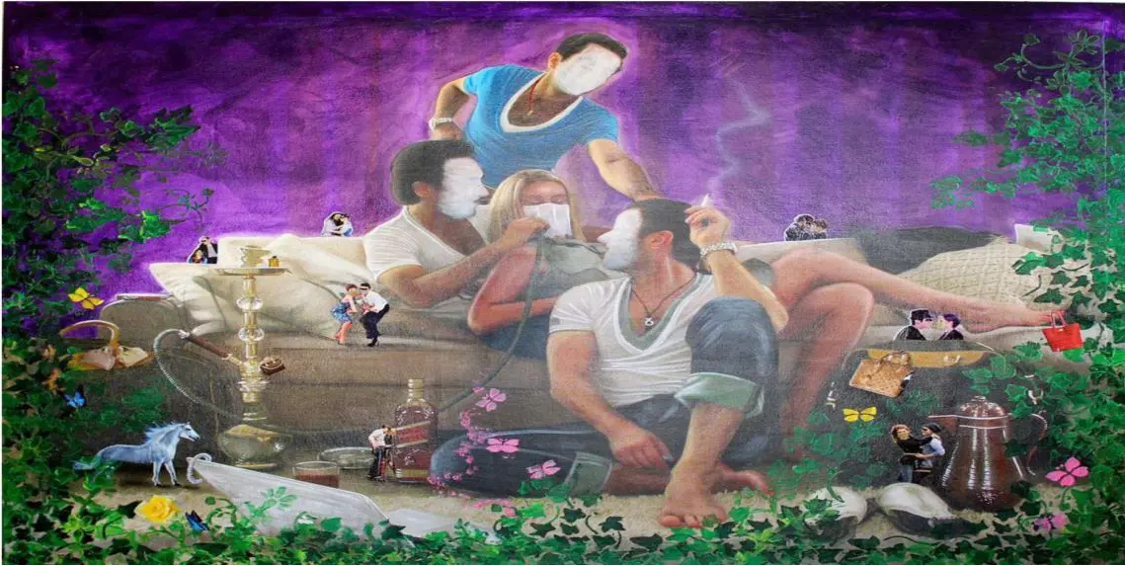
To understand the current landscape of Kuwaiti feminist art, one must look at the trailblazers who dared to cross the invisible red lines of cultural acceptability. A defining moment occurred in 2012 when the authorities shut down Shurooq Amin’s exhibition, It’s a Man’s World. Amin’s bold paintings depicted Khaleeji men in hidden, taboo scenarios—drinking, playing cards, and engaging with women outside of marriage. By turning the male gaze back onto men, Amin exposed the glaring double standards of a society that heavily polices female behaviour while turning a blind eye to male transgressions.
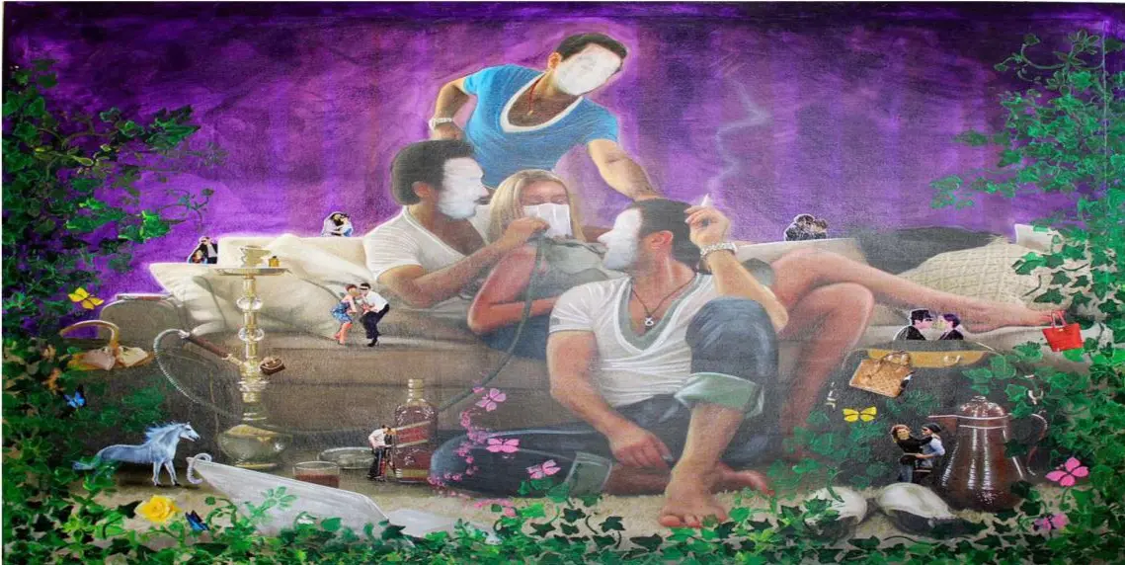
Art as resistance: Contemporary feminist artist Shurooq Amin is using bold visual language to challenge patriarchal norms globally. (Image: postscriptmagazine.org) Image used with permission.
“‘Art in Kuwait is no longer just an aesthetic pursuit; it is a critical mechanism for survival, dialogue, and legislative disruption.’”
Rather than silencing her, the censorship catapulted Amin’s work onto the digital spaces and the international stage, proving that attempting to suppress feminist art often amplifies its message.
As Amin concluded, ‘My exhibition is continuous on Twitter and Instagram. I will continue to draw and publish, and they will not be able to silence me except by killing me. Then, my paintings will continue to speak for me, as they are part of the history of society in Kuwait’.
Other contemporary artists, such as Monira Al Qadiri, have taken a different but equally subversive route. Al Qadiri’s work frequently explores the intersections of petro-culture, gender fluidity, and identity, challenging the rigid, hyper-masculine narratives that dominate the oil-rich Gulf.
Abolish Article 153: When Art Meets Legislation
Perhaps the most striking example of art driving tangible political change in Kuwait is the Abolish Article 153 campaign. Founded by a coalition of activists, academics, and creatives, the movement targets a draconian penal code that effectively sanctions honour killings by treating them as misdemeanours.
What makes Abolish 153 unique is its multi-activist strategy, including reliance on the arts. The campaign regularly hosts art exhibitions and design competitions to raise awareness and fund shelters for survivors of domestic violence. By transforming a dry, legalistic issue into a visceral, emotional experience, the campaign has successfully engaged the Kuwaiti youth and pressured parliamentarians. The art serves as a ‘Trojan horse’ drawing people with aesthetic beauty, only to confront them with the ugly reality of gender-based violence.
Beyond Borders: A Global Tapestry of Feminist Art
While Kuwait’s movement is deeply rooted in its specific socio-political context, it shares a profound, beating heart with feminist art activism around the globe. By placing Kuwaiti artists in a comparative global context, we can see how visual culture serves as a universal language of defiance against patriarchy.
The Guerrilla Girls and Institutional Critique
In the United States, the legendary Guerrilla Girls have spent decades using culture jamming, statistics, and humour to expose sexism and racism in the art world. Much like Shurooq Amin exposing the hypocrisy of Kuwaiti society, The Guerrilla Girls came together in search of new ways to call attention to discrimination. While forcing the public to look at the uncomfortable truths of male-dominated museum collections. They wear gorilla masks to maintain anonymity, an expression of the exclusion of women artists and artists of colour from the art world and its institutions. Both movements utilise shock value and public exhibition to force a societal reckoning.
Latin America’s Ni Una Menos
The intersection of art and the fight against gender-based violence, as seen in Kuwait’s Abolish 153 campaign, finds a powerful parallel in Latin America’s Ni Una Menos (Not One Woman Less) movement. Originating in Argentina, this grassroots feminist movement protests the horrific rates of femicide. Visual art, striking graphic posters, and massive public performance art—such as the viral chant ‘A Rapist in Your Path’ by the Chilean collective Las Tesis—have been central to their strategy. In both Kuwait and Latin America, art is used to mourn the dead, protect the living, and demand immediate legislative action.
Iran’s ‘Woman, Life, Freedom’
Just across the Gulf, the ‘Woman, Life, Freedom’ protests in Iran have demonstrated the lethal stakes of feminist activism. Following the death of Mahsa Amini, artists within Iran and the Iranian diaspora flooded social media and public spaces with illustrations, animations, and protest songs to abolish the ‘morality police’ which enforce discriminatory laws against women. Iranian women are using visual culture to reclaim their bodily autonomy from state control, proving that in the Middle East, the female body is inherently a political battleground.
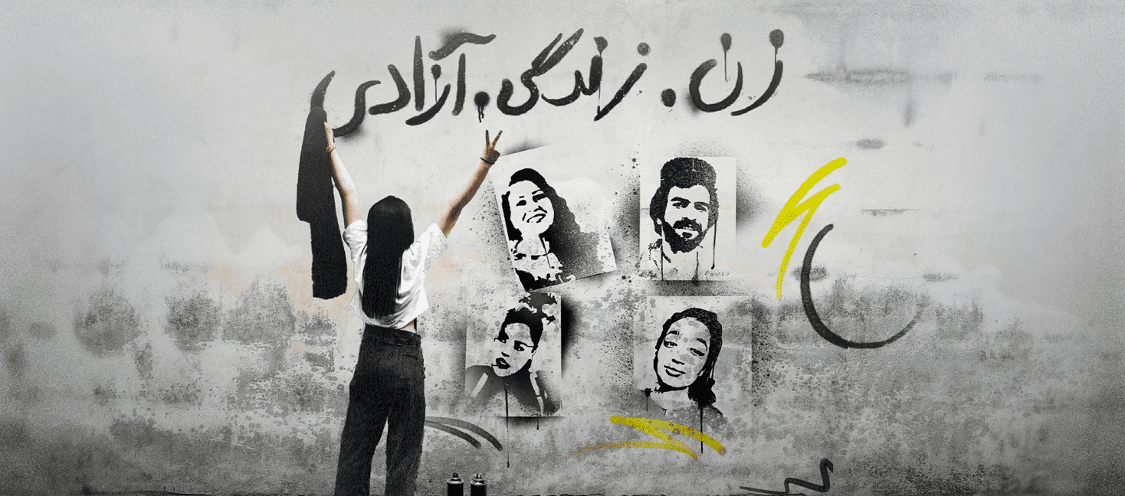
Street demonstrations are transforming from spaces of passive observation into active arenas for social justice and legislative reform. (Image: Woman Life Freedom ©Amnesty International) Image used with permission.
Conclusion: The Unstoppable Momentum of Creative Resistance
The feminist art activism emerging from Kuwait is a testament to the enduring power of creativity in the face of systemic oppression. Artists like Shurooq Amin and the visionaries behind Abolish Article 153 are not just creating pictures; they are drafting the blueprints for a more equitable future. They have successfully transformed the gallery space from a realm of elite, passive observation into an active arena for social justice.
When viewed through a global lens—alongside the Guerrilla Girls in the US, the Ni Una Menos movement in Latin America, and the brave women of Iran—it becomes clear that Kuwaiti feminist art is part of a massive, interconnected wave of global resistance. Despite facing censorship, societal backlash, and legal hurdles, these artists continue to pick up their brushes, cameras, and digital tools. They remind us that while laws can be rewritten and protests can be dispersed, an idea captured in art becomes immortal. As long as inequality exists, the canvas will remain a catalyst, and the global sisterhood of artist-activists will continue to paint the way forward.
Got a feminist opinion you want to share? We want to publish your work! Anyone can contribute to the GJP blog, no experience necessary! Find out more about being featured on our blog.
About the Author
Dr Eiman Alabdulghani is an independent digital scholar dedicated to exploring the intersection of contemporary digital activism practices, global social issues, and human rights. She believes in the power of storytelling to bridge cultural divides and amplify marginalised voices
Email:emmajournal.uk@gmail.com