
By Alka Dadheech (she/her)
Travelling can be a source of anxiety for many, particularly for women, who face unique challenges that affect themselves, their families, and society at large. In India, women must navigate safety concerns, hygiene issues, expenses, and lack of female-centric public infrastructure. As a social worker who frequently travels alone, I have experienced both the difficulties and the empowerment that comes with this independence. My journeys have shown me that travelling as a woman is not just about reaching a destination—it involves negotiating safety, challenging patriarchal norms, and finding strength in independence.
I have been working in the social sector for the last 5 years. First as a student of social work, and now as an employee. During this time, I have experienced great personal and professional development, and I believe travelling to different places and meeting different people has been crucial to my growth.
When I chose to pursue social work, I knew it would require a lot of travelling. I had been living away from my village in Rajasthan since the age of 16 for higher studies so I was familiar with travelling. Still, when I first moved to Gandhinagar, the capital of the state of Gujarat, for my master’s degree, my father insisted on accompanying me. He was worried for me; at the time I didn’t understand why.
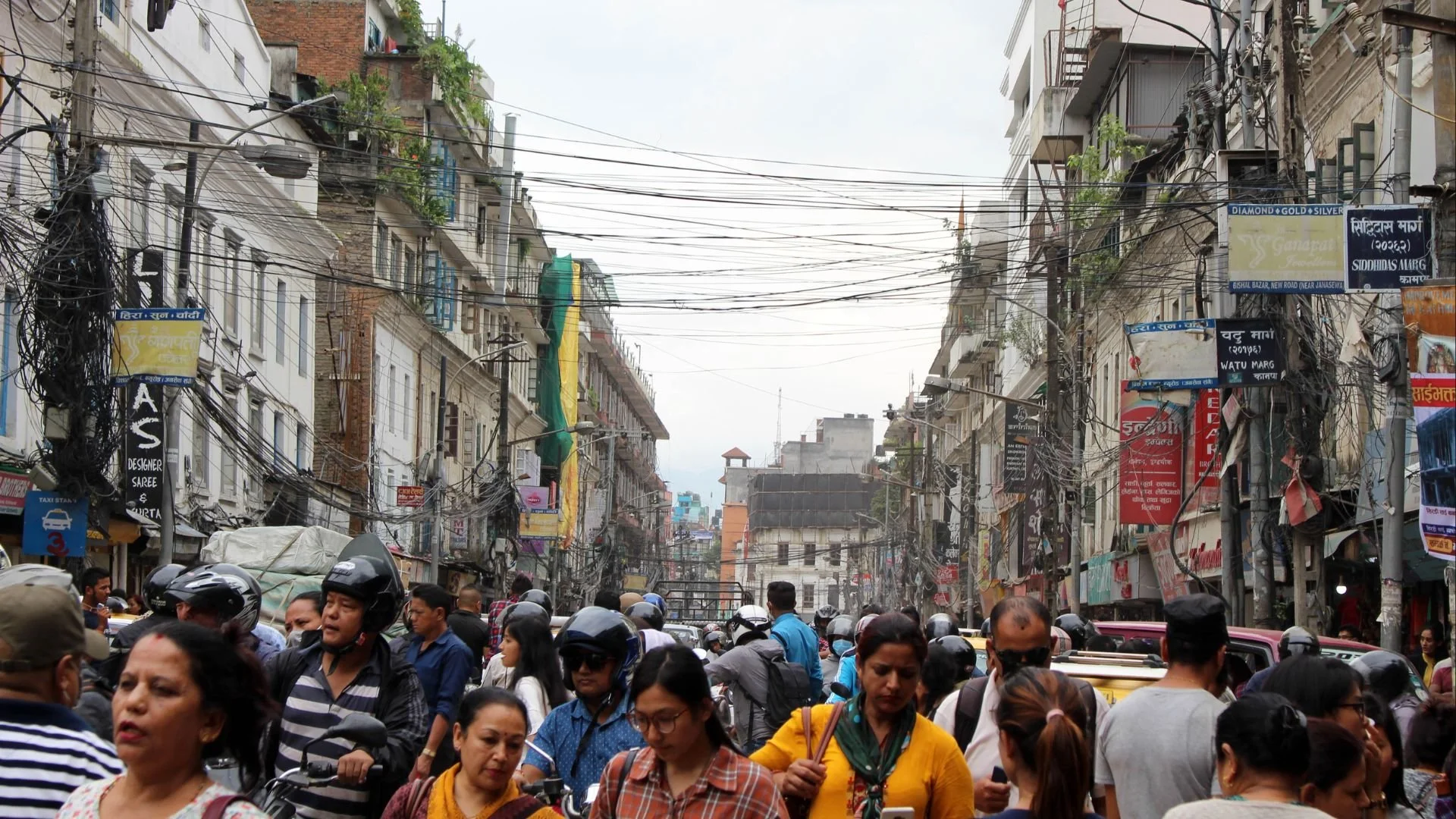
Fieldwork was an essential part of my degree, and on the first day, I struggled to navigate Ahmedabad’s public transport. Despite visiting the NGO two days earlier, I had no idea how to reach my destination, and my first BRTS bus ride was crowded and confusing, requiring two changes. The city was vast, busy, and unfamiliar. As a woman travelling alone, I had to remain constantly alert—checking if someone was following me, avoiding eye contact, choosing where to sit—and deal with overcrowding, unwanted touches, and staring. Even a simple commute required planning and vigilance. Today I can navigate Ahmedabad with ease, but staring and unwanted attention remain common.
My family always worried. For them, me working in NGOs and travelling alone as a girl was like the Hindi idiom ‘aa bail mujhe maar’—inviting trouble. I have often been told that social work is not ‘safe’ for women, especially by family. That was also the reason why I was discouraged from pursuing journalism, my first choice for a career. My family insisted that teaching or academics would be a ‘safer’ path for me as a woman. Even after working all these years in the social sector, with each job requiring significant fieldwork, I still face pressure from my parents to give up social work professionally and become a teacher or professor.
My first social work job required travelling to Delhi for orientation, which made me anxious given the city’s reputation for being unsafe for women. In 2023, Delhi reported 13,366 crimes against women, including 1,088 rape cases—the highest among India’s 19 metropolitan cities.¹ Government data from 2018–2020 similarly reflects persistent safety challenges.² According to the National Crime Records Bureau (NCRB), Delhi consistently recorded the highest rate of crimes against women during these years, particularly in categories such as sexual harassment, stalking, kidnapping, domestic violence, and rape. A significant proportion of these crimes occurred in public or semi-public spaces—roads, markets, buses, and metro stations—indicating that everyday mobility remained unsafe for women, not just isolated incidents.³ To protect myself from any unwanted situation I carried a 50 cm metal stick, and when I arrived at Hazrat Nizamuddin station, I had to shout to ward off overzealous taxi drivers. That day was overwhelming.
Fieldwork in rural areas came with its own set of challenges. The lack of clean public toilets forced me and my colleagues to limit our water intake, leading to health issues like dehydration and urinary tract infections. Studies show that limited access to hygienic public toilets is linked to higher rates of UTIs among women in India.⁴ A survey found that over 66% of female public toilets lacked a working flush, 53% had no running water, and more than 51% had no facility for hand washing.⁵ Additionally, there are documented cases of harassment and even violence towards women using public toilets, especially at night.³ My second job lasted only three months but again involved lots of travelling. By then, I had become more confident. I learned how to book train tickets, plan travel, and navigate new places. Thankfully, that job mostly involved city travel with good transport connections, and sometimes I was even provided with cabs. Employer support, such as providing cabs or safe transport, made a significant difference in reducing anxiety and ensuring safety, highlighting the role organisations can play in supporting women who travel for work.
After a year-long break, I got a new job that took me to tribal areas of Gujarat. That too has been a similar experience. Mostly, I travel by train, still the toilet issues remain the same, and so does the constant staring. Nearly 40% of women in Indian cities report feeling unsafe in public spaces, with Delhi and Kolkata ranking among the least secure .⁶ These challenges stem from inadequate infrastructure and entrenched social attitudes toward women. Solutions could include building cleaner, accessible toilets and running campaigns to promote gender sensitisation and respectful behaviour .⁷Recently I had to travel to Delhi again, this time for recreation. It took me three days to find safe accommodation within my budget. My checklist was long—will it be safe for women? Will there be hidden cameras? Are the toilets clean? How are the staff? This process made me realise how challenging it is for women to ensure safety and comfort while travelling, regardless of purpose. Most reviews online were written by men, with few women sharing their experiences. Incidents like a 30-year-old man arrested for placing spy cameras in a tenant’s bathroom in Shakarpur, Delhi ,⁸ or a private airline pilot recording women with hidden cameras in Kishangarh .⁹ show that such fears are not unfounded. That’s when I realised again how public spaces are still not women-friendly in India.
Talk about ‘women’s empowerment’ must be accompanied by action in order to be meaningful. Basic public facilities must improve drastically to allow the common woman of India to travel with dignity.
People often ask me—will I be fine going alone? Will my husband accompany me? These questions come not just from men, but even from educated women. I usually say, ‘I’ve travelled alone before, and I’ll be fine.’ Yet when women themselves reinforce these doubts, they contribute to a self-fulfilling prophecy: avoiding solo travel perpetuates the idea that independent travel is unsafe. Is it protection, or is it control? This limits mobility and reinforces societal norms about what women can and cannot do, showing how deeply ingrained patriarchal attitudes remain.
At the same time, walking alone at platforms or travelling independently also feels empowering. My husband has played a big role in supporting me. He has never made me feel like he is ‘allowing’ me to travel or work. He will come to drop me to stations, and he contributes to household chores fairly. Many of my colleagues cannot say the same, as they struggle with restrictions from family or childcare responsibilities. The struggles women face at traditional workplaces is a whole other topic, worthy of its own discussion.
To conclude, I feel society needs to be more women-friendly. My experiences as a travelling social worker have shown me how much of this world is still a man’s world, with women constantly having to make a space for ourselves.
Travelling alone as a woman is not easy—it comes with fears, planning, and problems—but it is also empowering. It is a way of proving to the patriarchal system that women can do it. I’ve seen my mother and grandmother travel alone, and I continue that journey. But I also hear stories of women who cannot step out without male companions.
Instead of putting women in the cage of ‘protection’, we should focus on making society safer, freer, and more equitable. This means improving public infrastructure, ensuring safe transport, enforcing measures against harassment, and challenging cultural attitudes that restrict women’s mobility. By addressing these structural and social barriers, women can move independently, pursue careers of their choice, and fully participate in public life without being constrained by fear or overprotection.
Got a feminist opinion you want to share? We want to publish your work! Anyone can contribute to the GJP blog, no experience necessary! Find out more about being featured on our blog.
References
1. Telegraph India. 2023. "Crimes Against Women Rise in India, Delhi Still Most Unsafe City"
2. Sansad. 2020. "Ministry of Women and Child Development Data"
3. . NCRB (National Crime Records Bureau). “Crime in India Reports 2018, 2019, 2020.” Ministry of Home Affairs, Government of India.
4. https://pubmed.ncbi.nlm.nih.gov/35668379/
5. PMC. 2000. "Women’s Safety and Public Toilets in India"
British Safety Council India. 2025. "Toilet Trouble: How India’s Working Women Still Lack Suitable Facilities
6. The Hans India. 2025. "Nearly Half of Urban Women in India Report Feeling Unsafe in Public Spaces"
7. https://www.pib.gov.in/Pressreleaseshare.aspx?PRID=1579514
8. NDTV. 2025. "Delhi Man Records Woman Tenant With Hidden Cameras in Toilet and Bedroom"
9. Times of India. 2025. "Airline Pilot Arrested For Recording Women With Spy Camera"